


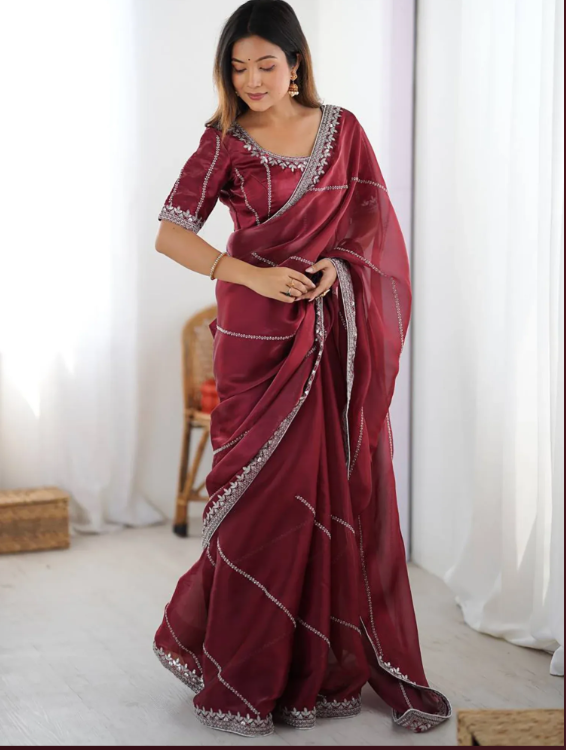
Evening celebrations often call for colors that feel rich without becoming too dramatic. A maroon saree naturally fits this setting because its deep tone can look elegant under warm indoor lighting while working beautifully with traditional jewelry, detailed blouses, and refined styling. It is a versatile choice for receptions, festive dinners, weddings, and family functions.
The beauty of maroon lies in how easily it can move between classic and contemporary dressing. Gold embroidery can make it feel traditionally luxurious, while a simpler blouse and minimal accessories can create a more modern appearance. Choosing the right fabric and finish can make the color work beautifully for different evening occasions.
Understanding the Character of Different Fabrics
Fabric can change how maroon appears once the saree is actually worn. Silk creates a naturally rich finish, while georgette and chiffon offer softer movement. Velvet details can make an evening outfit feel more luxurious, whereas lighter blends may be easier to carry during longer celebrations.
The occasion should guide the fabric choice rather than appearance alone. A formal reception may suit a richer textile with subtle sheen, while a family dinner can work with something lighter and easier to manage. Considering comfort alongside the visual appeal helps create a more practical festive outfit.
Choosing Embroidery That Works With Deep Colors
Deep shades already have visual strength, so embroidery should be selected thoughtfully. Gold zari, antique metallic work, pearls, and delicate sequins can stand out beautifully against maroon. Floral motifs can soften the overall appearance, while geometric borders may give the saree a more structured and traditional character.
The placement of decorative work also matters. A detailed border can create enough interest without covering the entire saree, while a decorated pallu can become the main focal point. Keeping one dominant area helps prevent the outfit from appearing visually crowded, particularly when statement jewelry will also be included.
Matching the Blouse to the Overall Mood
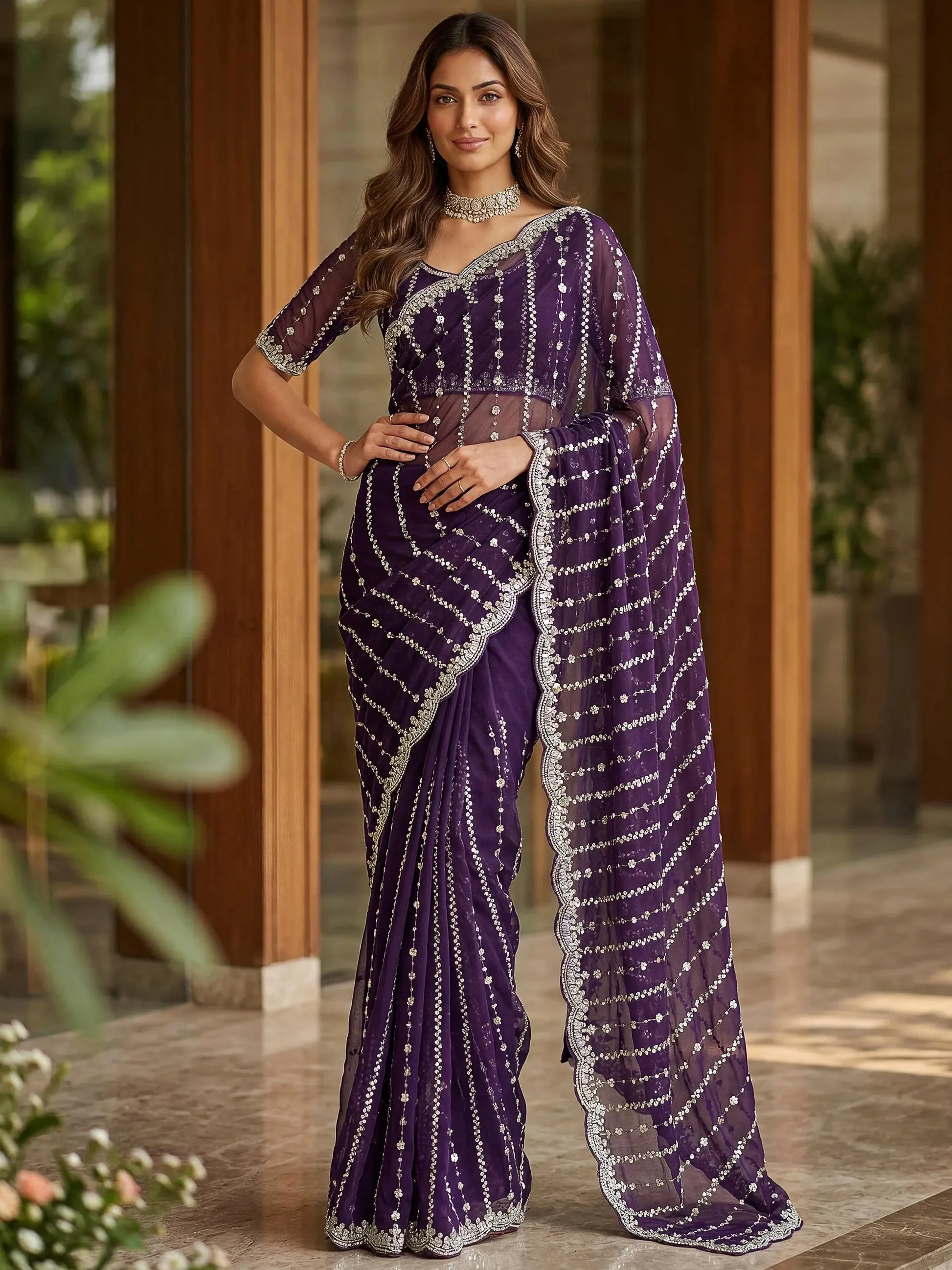
The blouse can either blend with the saree or introduce a subtle contrast. A matching purple blouse creates a seamless appearance, while gold, beige, black, or muted pink can provide a more noticeable variation. The neckline and sleeve design should also complement the amount of embroidery already present.
A purple saree with a simpler blouse can feel surprisingly contemporary when paired with sleek jewelry and a clean hairstyle. For more traditional occasions, an embroidered blouse with classic sleeves and a structured neckline can create additional richness. The best combination depends on whether the desired result is understated, festive, or distinctly traditional.
Jewelry Choices That Enhance Deep-Coloured Sarees
Jewelry can bring warmth and brightness to a deep-toned saree, but the amount should depend on the fabric and embroidery. Gold earrings, traditional bangles, and a delicate necklace create a classic appearance, while pearls or understated metallic pieces can make the same outfit feel more contemporary.
Statement jewelry works particularly well when the saree itself has minimal decorative work. If the border and pallu already contain intricate details, simpler earrings and bangles can create better balance. Choosing one main jewelry feature keeps the styling elegant while allowing the rich color of the saree to remain noticeable.
Hairstyles and Accessories That Complete the Outfit
The hairstyle can influence how formal the overall appearance feels. A neatly arranged bun works beautifully with traditional jewelry and detailed blouses, while soft waves can give the same saree a relaxed modern character. A braid decorated with small accessories can add another traditional element for weddings and cultural celebrations.
Handbags and footwear should complement rather than compete with the saree. Metallic sandals, embroidered juttis, or simple heels can all work depending on the event. A small clutch in gold, beige, black, or a matching shade can bring the different elements together without introducing unnecessary color.
-
Match jewelry with the saree’s embroidery.
-
Use hairstyles that complement the neckline.
-
Choose footwear according to event duration.
-
Keep handbags subtle when detailing is heavy.
Conclusion
A rich saree does not need to be reserved for grand evening celebrations. With lighter accessories and a simpler blouse, the same piece can work for family lunches, festive gatherings, cultural functions, and smaller celebrations. Changing the drape and jewelry can make its overall appearance noticeably more relaxed.
Choosing quality fabric and timeless detailing also increases its long-term usefulness. Rather than selecting a design based only on current trends, consider whether its color, embroidery, and silhouette will remain appealing over time. A thoughtfully styled maroon saree can therefore become a dependable part of an ethnic wardrobe, offering elegance whenever a celebration calls for something refined and memorable.